
Latest News Feed
Tweeted
Oct 1, 2026
 Spike Aerospace
@SpikeAerospace We already know how to fly faster than sound. The harder challenge is making supersonic flight quiet, practical, economically viable and useful across enough routes to matter. Why we believe speed still matters: https://t.co/HcRWqEK01J #SupersonicFlight #Aviationspikeaerospace.com/the-need-for-s… #SupersonicFlight #Aviation
Spike Aerospace
@SpikeAerospace We already know how to fly faster than sound. The harder challenge is making supersonic flight quiet, practical, economically viable and useful across enough routes to matter. Why we believe speed still matters: https://t.co/HcRWqEK01J #SupersonicFlight #Aviationspikeaerospace.com/the-need-for-s… #SupersonicFlight #Aviation

Tweeted
Sep 14, 2026
Spike Aerospace
@SpikeAerospace AI is already moving into aircraft design, simulation, systems engineering, manufacturing and certification. The implications for new aircraft development could be significant. AeroSigma looks at the companies building the tools: aerosigma.com/ai-for-aerospa…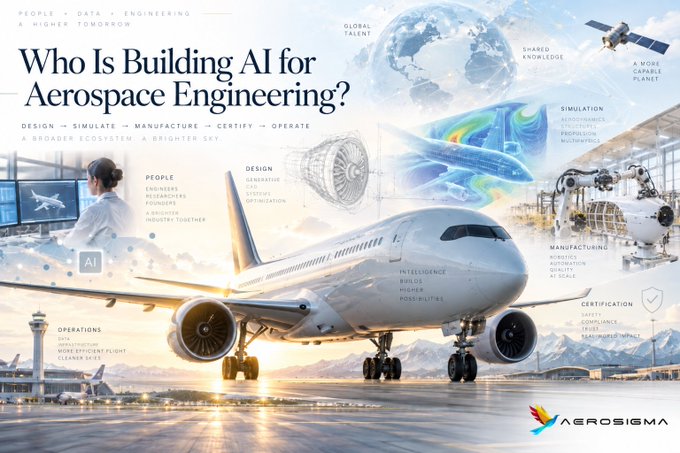
Spike Aerospace
@SpikeAerospace AI is already moving into aircraft design, simulation, systems engineering, manufacturing and certification. The implications for new aircraft development could be significant. AeroSigma looks at the companies building the tools: aerosigma.com/ai-for-aerospa…

Tweeted
Jul 30, 2026
Spike Aerospace
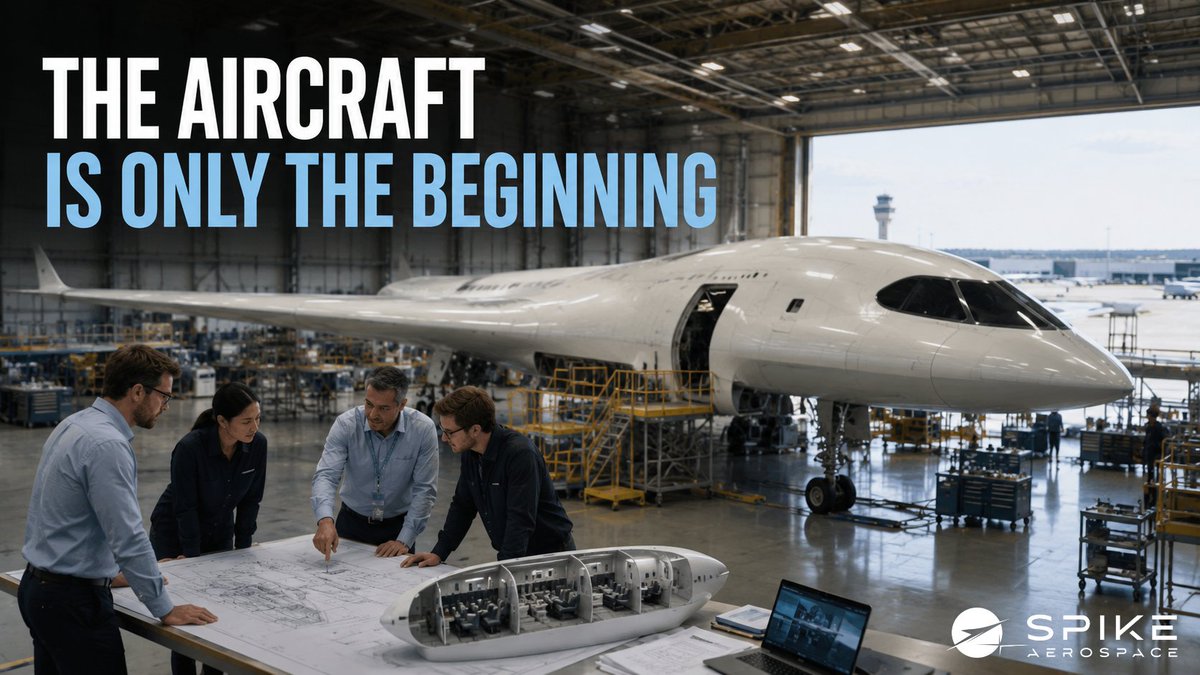
@SpikeAerospace Every clean-sheet aircraft program eventually learns the same lesson: Great engineering is only the starting point. Certification, manufacturing, suppliers, airport operations and customer needs all have to evolve together. That's as true for quiet supersonic aircraft as it is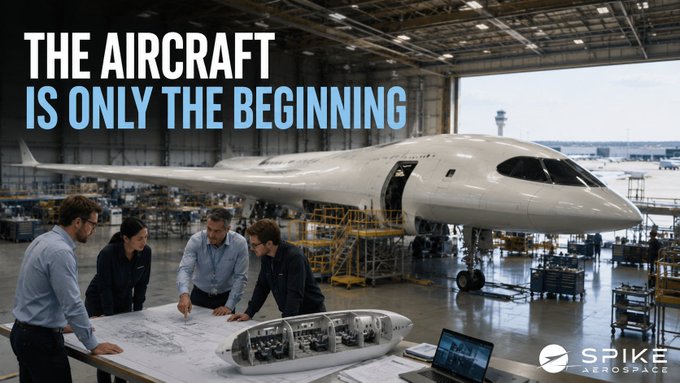
Spike Aerospace
@SpikeAerospace Every clean-sheet aircraft program eventually learns the same lesson: Great engineering is only the starting point. Certification, manufacturing, suppliers, airport operations and customer needs all have to evolve together. That's as true for quiet supersonic aircraft as it is
Tweeted
Jul 20, 2026
Spike Aerospace
@SpikeAerospace The future of flight depends on more than better aircraft. Sustainable aviation fuel must also become available at the scale, price and locations operators require. Aircraft, propulsion and fuel infrastructure must develop as one system—not as separate industriesx.com/VikKachoria/st…iU
Spike Aerospace
@SpikeAerospace The future of flight depends on more than better aircraft. Sustainable aviation fuel must also become available at the scale, price and locations operators require. Aircraft, propulsion and fuel infrastructure must develop as one system—not as separate industriesx.com/VikKachoria/st…iU
Tweeted
Jul 17, 2026
Spike Aerospace
@SpikeAerospace Quiet engines and aircraft operations are essential as air travel continues to grow at 5-7% annually with over 100,000 flights a day today. This is not just sonic boom that needs to be reduced but overall engine noise in airport communities too. x.com/VikKachoria/st…
Spike Aerospace
@SpikeAerospace Quiet engines and aircraft operations are essential as air travel continues to grow at 5-7% annually with over 100,000 flights a day today. This is not just sonic boom that needs to be reduced but overall engine noise in airport communities too. x.com/VikKachoria/st…
Tweeted
Jul 16, 2026
Spike Aerospace
@SpikeAerospace Every new aviation technology eventually faces the same question: Can it scale? Whether it's sustainable aviation fuel or quiet supersonic flight, engineering is only the first step. Manufacturing, certification, infrastructure, and economics determine what ultimately reaches x.com/VikKachoria/st…
Spike Aerospace
@SpikeAerospace Every new aviation technology eventually faces the same question: Can it scale? Whether it's sustainable aviation fuel or quiet supersonic flight, engineering is only the first step. Manufacturing, certification, infrastructure, and economics determine what ultimately reaches x.com/VikKachoria/st…
Tweeted
Jul 15, 2026
Spike Aerospace
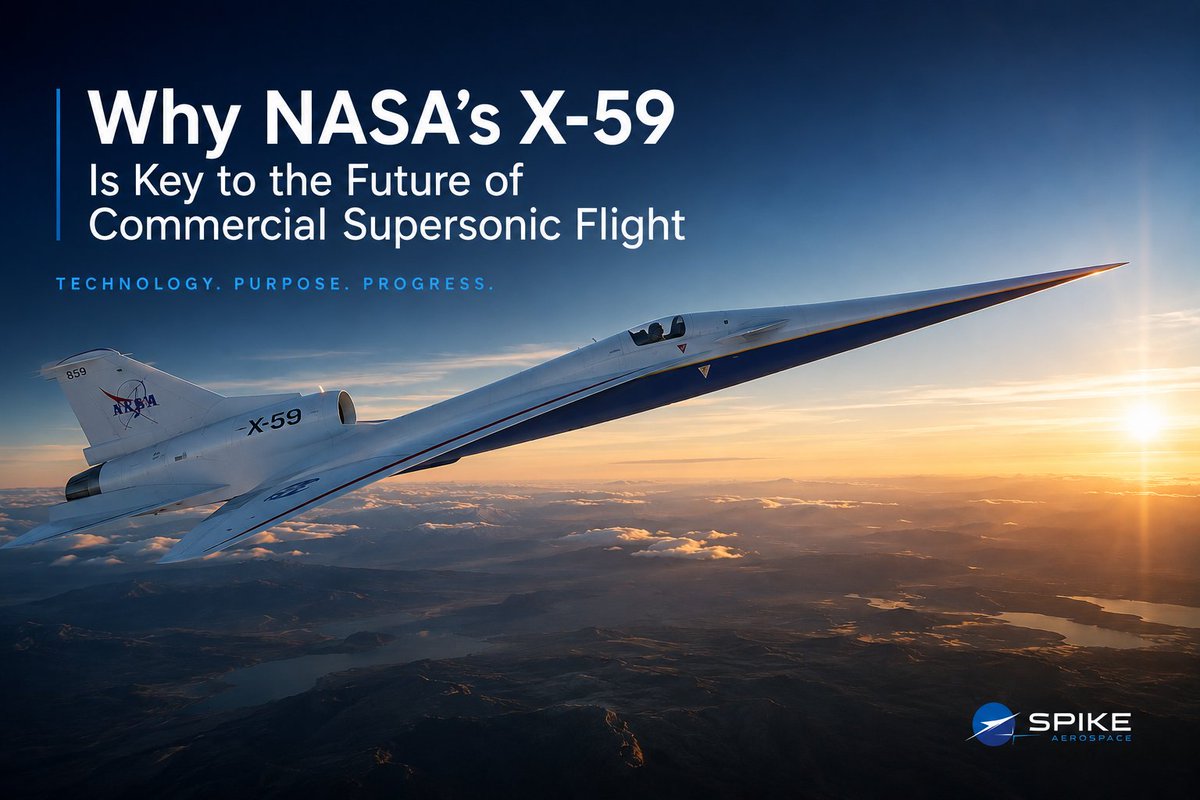
@SpikeAerospace Every successful X-59 flight reduces uncertainty. That's why NASA's flight test program matters. The goal isn't just to prove an aircraft can fly quietly at supersonic speed. It's to generate the evidence regulators need to write the next generation of certification standards.
Spike Aerospace
@SpikeAerospace Every successful X-59 flight reduces uncertainty. That's why NASA's flight test program matters. The goal isn't just to prove an aircraft can fly quietly at supersonic speed. It's to generate the evidence regulators need to write the next generation of certification standards.

Tweeted
Jul 6, 2026
Spike Aerospace
@SpikeAerospace A new era for supersonic flight may be beginning. The FAA has proposed the first major modernization of U.S. overland supersonic flight regulations in more than 50 years. The proposal doesn't authorize unrestricted supersonic flight—but it is an important step toward xg
Spike Aerospace
@SpikeAerospace A new era for supersonic flight may be beginning. The FAA has proposed the first major modernization of U.S. overland supersonic flight regulations in more than 50 years. The proposal doesn't authorize unrestricted supersonic flight—but it is an important step toward xg

Tweeted
Jun 19, 2026
Spike Aerospace
@SpikeAerospace NASA's X-59 just reached Mach 1.4. But the most important thing it's testing isn't speed. It's whether communities will accept routine supersonic flight overhead. The future of supersonic travel may depend as much on public acceptance and regulation as aerodynamics. Our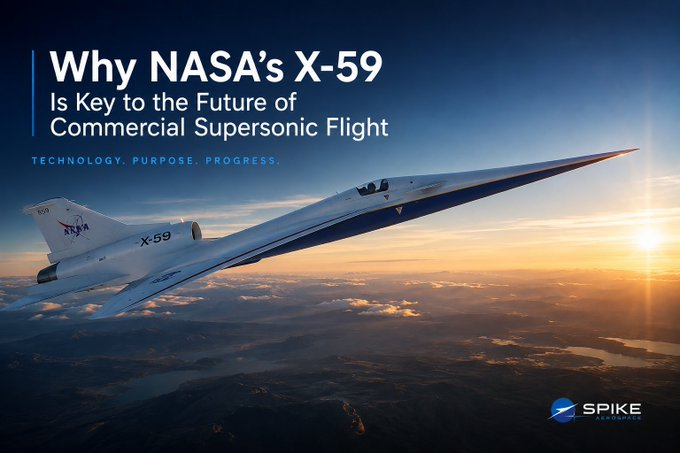
Spike Aerospace
@SpikeAerospace NASA's X-59 just reached Mach 1.4. But the most important thing it's testing isn't speed. It's whether communities will accept routine supersonic flight overhead. The future of supersonic travel may depend as much on public acceptance and regulation as aerodynamics. Our
Spike redesigns S-512 supersonic business jet concept